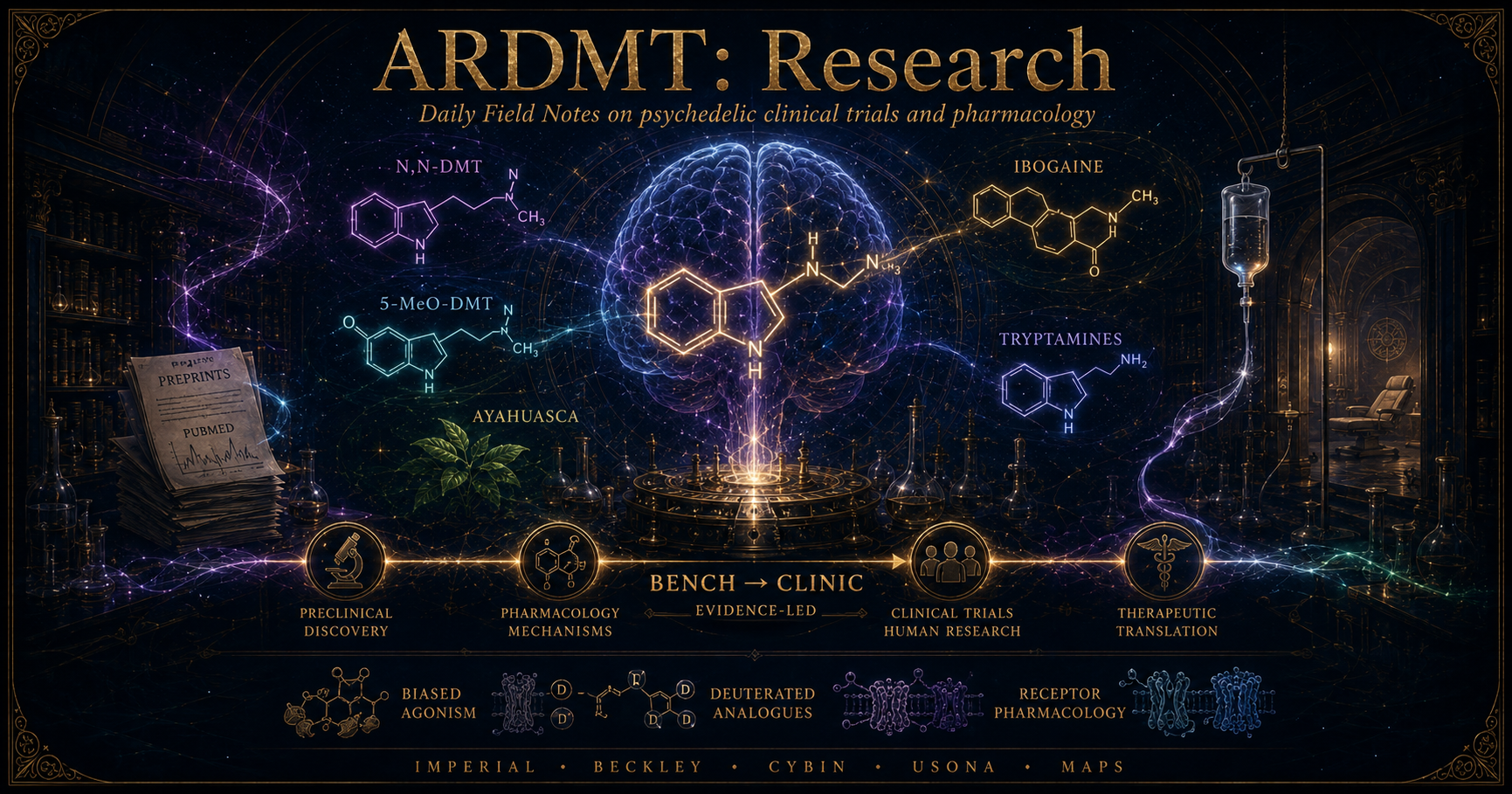
Research
Daily Field Notes on emerging psychedelic clinical trials and pharmacology — N,N-DMT, 5-MeO-DMT, ayahuasca, ibogaine, and related tryptamines. Coverage of preprints, peer-reviewed papers from PubMed, and the major research centres (Imperial, MAPS, Beckley, Cybin, Usona). Receptor pharmacology, biased agonism, deuterated analogues, and the translation of psychedelic compounds from bench to clinic. Independent, evidence-led, primary sources cited.

Everything I'm About to Tell You Is True.
The standard history of psychedelics is accurate, complete-sounding, and quietly doing work. Week one of the Exeter MSc, worked through as an argument rather than a syllabus.
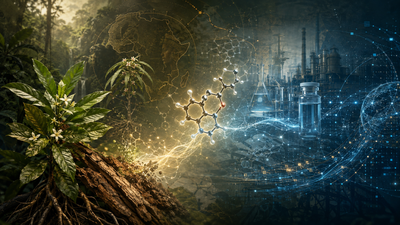
When the Molecule Escapes the Plant: Iboga, Gabon and Who Benefits from Psychedelic Medicine
Gabon has spent years trying to protect iboga from extraction. But ibogaine can already be produced from other African plants, while modern drug development can move further still — into synthetic analogues and digital information.

The Study That Became a Statute
How a 30-person ibogaine study moved through veteran philanthropy, Stanford, Silicon Valley biotech and US state legislatures — and why the money is only part of the story.

Before the Molecule
The field's own meta-analysis found that therapy hours predict nothing in psychedelic trials. That is not a finding about therapy. It is a finding about the record.
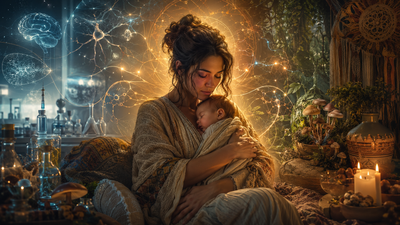
The Sensitive Period
Two studies of psychedelics and new motherhood are underway. One raised $103 million. The other raised $3,200. They are not asking the same question.
Before the First Dose
Twelve veterans with severe, treatment-resistant PTSD walked into a clinic in Ohio. Eleven weeks later, nine of them no longer met the diagnostic criteria for the condition that had, in most cases, defined a decade or more of their lives.
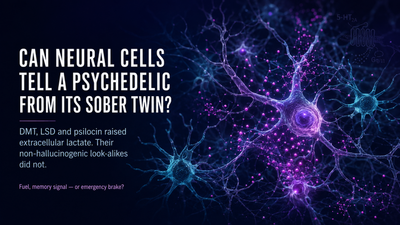
Can Neural Cells Tell a Psychedelic from Its Sober Twin?
DMT, LSD and psilocin made neural cells accumulate lactate. Their non-hallucinogenic look-alikes did not. Fuel, memory signal — or emergency brake?
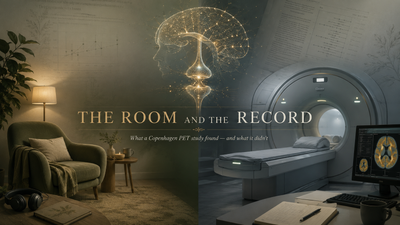
The Room and the Record
There is a claim in psychedelic research that has been repeated for sixty years without being tied convincingly to a lasting biological measurement. It goes like this: the drug is not the whole story.

Can a therapist guide you somewhere they've never been?
The medicine opens the door. Whether the person sitting beside you can actually help you walk through it — and how you'd even know — is the question the field hasn't reckoned with yet.
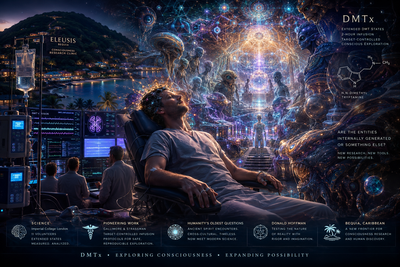
Holding the Door Open
DMT is not exotic in the sense of being rare. It is one of the most widely distributed psychedelics in nature, produced by a great many plants and animals — and, importantly, by mammals, including, in trace amounts, us. (We will come back to that startling fact in Part VII.)
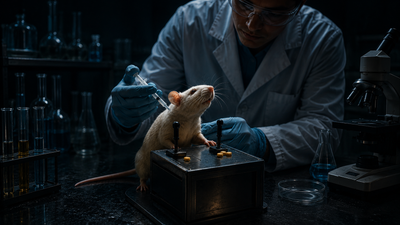
The Net That Holds the Brake: How One Dose of Psilocybin Quiets the Brain's Drive Toward Reward
A single injection, two days of silence, and then a measurable change in how much rats wanted what they used to want most — traced down to one inhibitory cell type wrapped in structural netting in the prefrontal cortex.
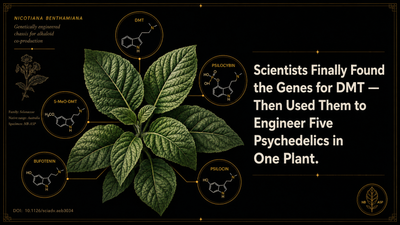
Who Owns a Molecule That Has Never Existed in Nature?
In April 2026, a team at the Weizmann Institute of Science announced they had engineered a single, unglamorous relative of tobacco to produce five different natural psychedelics at once: psilocybin and psilocin, the mushroom compounds; DMT,