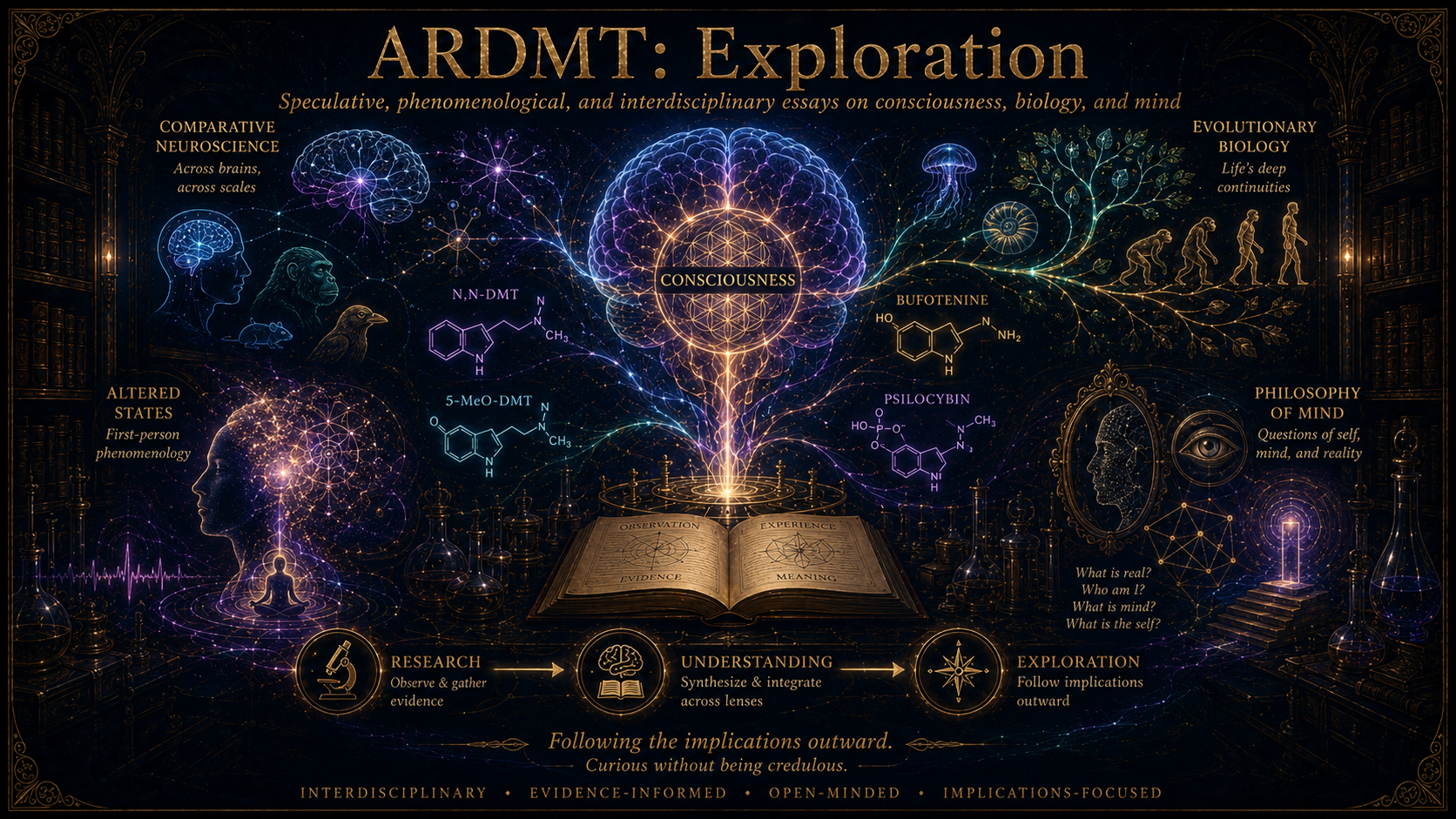
Exploration
Speculative, phenomenological, and interdisciplinary essays on what DMT and the wider psychedelic compounds reveal about consciousness, biology, and mind. Where Research catalogues findings and Understanding consolidates them, Exploration follows the implications outward — into comparative neuroscience, evolutionary biology, the phenomenology of altered states, and the philosophical questions that psychedelic experience makes unavoidable. Curious without being credulous.
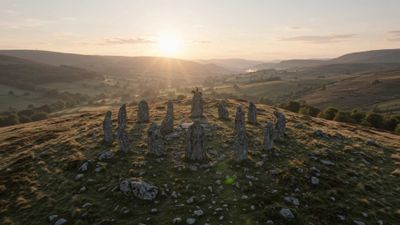
The Rocks That Are People
The English have never stopped treating some places as if they were somebody. Whether that makes those places persons is a harder question.
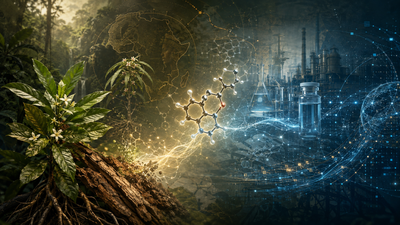
When the Molecule Escapes the Plant: Iboga, Gabon and Who Benefits from Psychedelic Medicine
Gabon has spent years trying to protect iboga from extraction. But ibogaine can already be produced from other African plants, while modern drug development can move further still — into synthetic analogues and digital information.

The Study That Became a Statute
How a 30-person ibogaine study moved through veteran philanthropy, Stanford, Silicon Valley biotech and US state legislatures — and why the money is only part of the story.

23 of 25
A deep dive into the magnesium-ibogaine treatment. So What Does a 12-Month Ibogaine Study Actually Show?
Before the First Dose
Twelve veterans with severe, treatment-resistant PTSD walked into a clinic in Ohio. Eleven weeks later, nine of them no longer met the diagnostic criteria for the condition that had, in most cases, defined a decade or more of their lives.
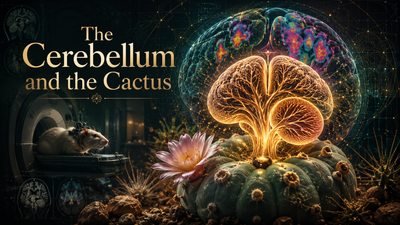
The Cerebellum and the Cactus
A new imaging study says mescaline does something to the cerebellum that no other psychedelic does. Half of that claim survives contact with the comparison papers. The connectivity half does not: the same laboratory had already reported cerebellar hyperconnectivity under LSD and psilocybin,
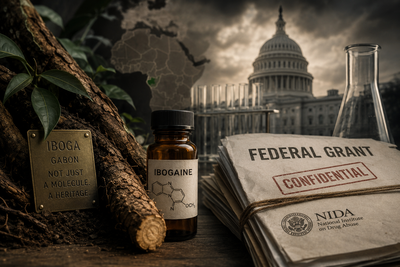
The Root It Refused
In July 2026 the United States began paying to reopen the human ibogaine programme it walked away from thirty years ago. The science is real. The cardiac risk that stalled it is real.

Tonnage quantities
Eli Lilly's 3.8 billion dollar move into psychedelic medicine is being described as an arrival. Its own history makes it look more like a return, and the drug it is buying carries a contested history of its own
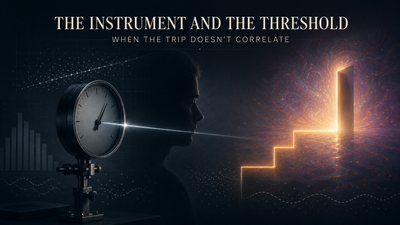
The Instrument and the Threshold
This essay is about a narrow and unglamorous claim: that the field's standard method for answering the question cannot answer it. Not that the answer is one thing or the other.
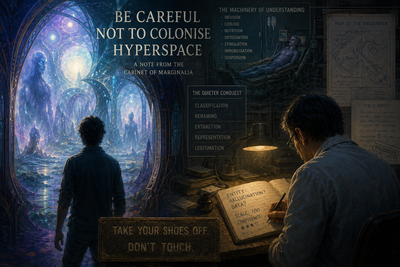
Be Careful Not to Colonise Hyperspace
The phrase surfaces, briefly, on a slide. Be careful not to colonise hyperspace. It is meant, I think, as a caution about attitude — about arriving in the DMT state with the postures of the conqueror rather than the
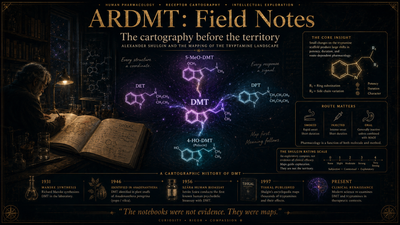
Shulgin's tryptamine notebooks: the cartography DMT research still navigates by
The relevance of Shulgin's tryptamine work to present-day DMT research is not merely historical. Several active lines of enquiry trace their intellectual ancestry directly to his structure-activity observations.
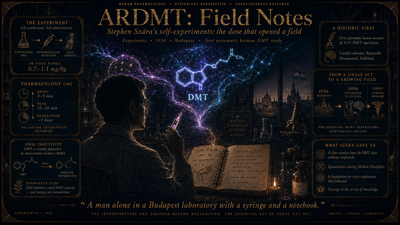
Szára's 1956 self-experiment: the Budapest dose that launched DMT research
Cold War Hungary, 1956: Stephen Szára couldn't get LSD, so he made DMT and dosed himself. Modern psychedelic research began that afternoon.