Author

Stephen Page
Writer on DMT, ayahuasca, iboga and tryptamine research. LLB; incoming MSc in Psychedelics: Mind, Medicine and Culture, University of Exeter (2026)
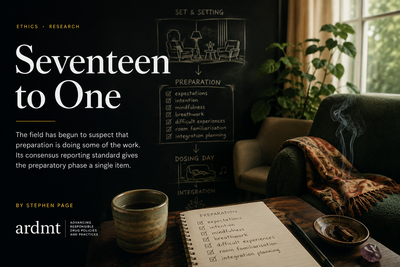
Ethics
Seventeen to One
The field has begun to suspect that preparation is doing some of the work. Its consensus reporting standard gives the preparatory phase a single item.

Cabinet of Marginalia
Thirty-Seven Pages, Posted from Amsterdam
In 1874 a farmer in upstate New York privately printed a pamphlet about anaesthesia and circulated it himself. Almost no original copies can now be found. One of them changed William James's mind — and Harvard turns out to hold the archive where the hunt should start.
Ethics
Before the First Dose
Twelve veterans with severe, treatment-resistant PTSD walked into a clinic in Ohio. Eleven weeks later, nine of them no longer met the diagnostic criteria for the condition that had, in most cases, defined a decade or more of their lives.

Ethics
When Motherhood Feels Like a Trip: A Compelling Parallel That Hasn't Been Tested
A mother says psilocybin made her calmer, more patient, better at the job. A Harvard thesis says her brain and the mushroom may be working on the same territory. The parallel is real. What it means is not yet known.
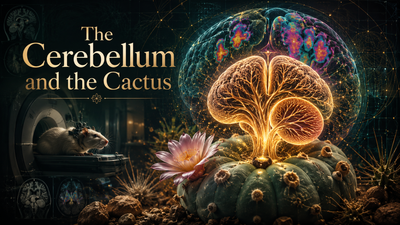
Understanding
The Cerebellum and the Cactus
A new imaging study says mescaline does something to the cerebellum that no other psychedelic does. Half of that claim survives contact with the comparison papers. The connectivity half does not: the same laboratory had already reported cerebellar hyperconnectivity under LSD and psilocybin,
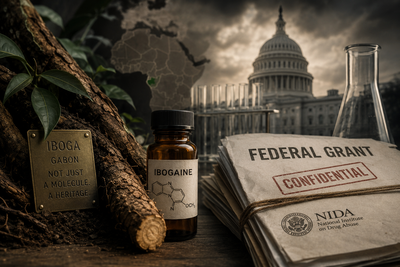
Ethics
The Root It Refused
In July 2026 the United States began paying to reopen the human ibogaine programme it walked away from thirty years ago. The science is real. The cardiac risk that stalled it is real.
ARDMT Field Notes
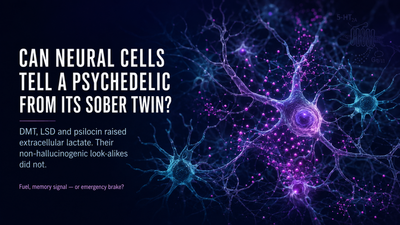
Can Neural Cells Tell a Psychedelic from Its Sober Twin?
DMT, LSD and psilocin made neural cells accumulate lactate. Their non-hallucinogenic look-alikes did not. Fuel, memory signal — or emergency brake?

ARDMT Field Notes
Tonnage quantities
Eli Lilly's 3.8 billion dollar move into psychedelic medicine is being described as an arrival. Its own history makes it look more like a return, and the drug it is buying carries a contested history of its own
Ethics
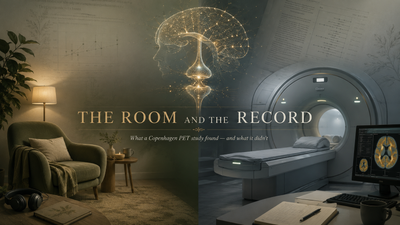
The Room and the Record
There is a claim in psychedelic research that has been repeated for sixty years without being tied convincingly to a lasting biological measurement. It goes like this: the drug is not the whole story.

ARDMT Field Notes
Can a therapist guide you somewhere they've never been?
The medicine opens the door. Whether the person sitting beside you can actually help you walk through it — and how you'd even know — is the question the field hasn't reckoned with yet.
Understanding
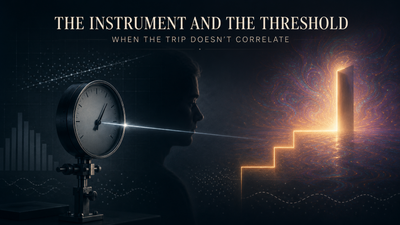
The Instrument and the Threshold
This essay is about a narrow and unglamorous claim: that the field's standard method for answering the question cannot answer it. Not that the answer is one thing or the other.

Cabinet of Marginalia
The Litany Against Fear
In March of 2026, Christian Angermayer — biotech financier, founder and chairman of the psychedelic pharma company AtaiBeckley, largest shareholder in the same — published a short essay with a large claim.